
“Travel has become our fountain of youth” – Condé Nast Traveller

Today, health and wellness is one of the top motivations for travel, with travellers seeking improved physical and/or mental health by the end of their trip. This trend goes beyond yoga and spa breaks to help travellers not only recharge but to increase resilience, purpose and longevity.
“With wellness so often framed as more activities to do or things to consume, it’s no surprise to see a trend focusing on resetting and energy management,” notes Lee Chambers, travel psychologist and founder of workplace wellbeing agency Essentialise. “Honouring our biological rhythms and putting human sustainability at the core of the travel experience is actively countering the indulgence of travelling we saw as the world opened back up [after Covid].”
Given the power and omnipresence of wellness, we’re taking a closer look through a French lens. What can you experience across the Channel to answer to the hottest wellness trends right now?
1. Digital detox, quiet escapes and ‘JOMO’

In a largely online and overstimulated world, more and more of us are returning to nature to feel revitalised, and to belong to something more tangible. Keywords Everywhere saw searches for ‘digital detox’ more than triple between 2023 and 2024, and in early 2024 Airbnb reported a nearly 100% year-on-year increase in searches for ‘off-grid accommodation’. In a Skyscanner survey, 62% of respondents said they enjoyed visiting gardens on their holidays.
‘Calmcations’ – holidays purely focused on creating a sense of tranquillity – continue to be popular for 2025. Evading noise is a particular priority, following a report from the World Health Organisation that rates noise pollution, particularly from traffic, as the second most important cause of ill health in Western Europe. Research suggests that spending time in silence can help us manage stress, boost creativity, and even stimulate the development of new brain cells.
JOMO travel (the joy of missing out) goes hand in hand with a digital detox or calmcation – it’s about doing less, feeling more and letting yourself be carried away by the experience and the people you meet. It’s also a way of combatting overtourism and a great antidote to tickbox travel.
Where can I get this in France?

Guests on The Offline Club’s Digital Detox Retreat in Saint-Jean-de-Duras (Nouvelle-Aquitaine) stay on a permaculture farm and enjoy nature walks, guided meditations, reading, swimming, games, yoga and reflection, plus optional excursions to a local Buddhist temple. Getting back to nature as adults is a choice – but getting the kids to follow suit can be a different matter. Le Prieuré Saint-Rémy in Northern France offers digital detoxes for the whole family.
2. Learning new skills
We know that changing our routine can be as good as a rest, but in this world of busy schedules, ‘always-on’, overthinking brains and seemingly endless newsfeeds of doom, finding time to relax and reflect isn’t always the tonic we hope for. Instead, engaging in something completely removed from our day-to-day routine can enable us to break free of unhelpful thinking patterns and leave us feeling refreshed and reinvigorated. In 2025, find that joie-de-vivre by trying a new skill or creative activity.
Where can I get this in France?

In a converted lockkeeper’s cottage on the Mayenne River in Pays de la Loire, artisan Antoine Faucheux will teach you to make your own knife at the Coutellerie du Maine-Anjou. “Knife making is a rare profession nowadays, and I feel it’s important to share the techniques so they don’t get lost. People can come and see how knives are made, ask questions and take pictures – an educational aspect to my work that is particularly close to my heart.”
3. Coolcations

This means travel that avoids high temperatures. Google Trends has shown a 300% increase in searches for ‘cooler holidays’ over the last 12 months – and for those used to holidaying in southern Europe, the question has moved from ‘where’s hot?’ to ‘where’s not?’. As temperatures in traditional summer holiday hotspots around the Mediterranean continue to break records, climate change is having an increasing influence on where we travel.
Where can I get this in France?
Fortunately, France is better placed than some other European countries for doses of cooler air, with its long stretches of coastline on the English Channel and Atlantic as well as its lofty mountains. You could choose to linger on Brittany’s rugged coast and go island hopping – check out summer in Brittany. Or head into the Alps or Vosges, where temperatures drop as you climb (around 2° every 300 metres) but there’s still plenty of sun – here’s why they’re a strong contender.
4. Human connection
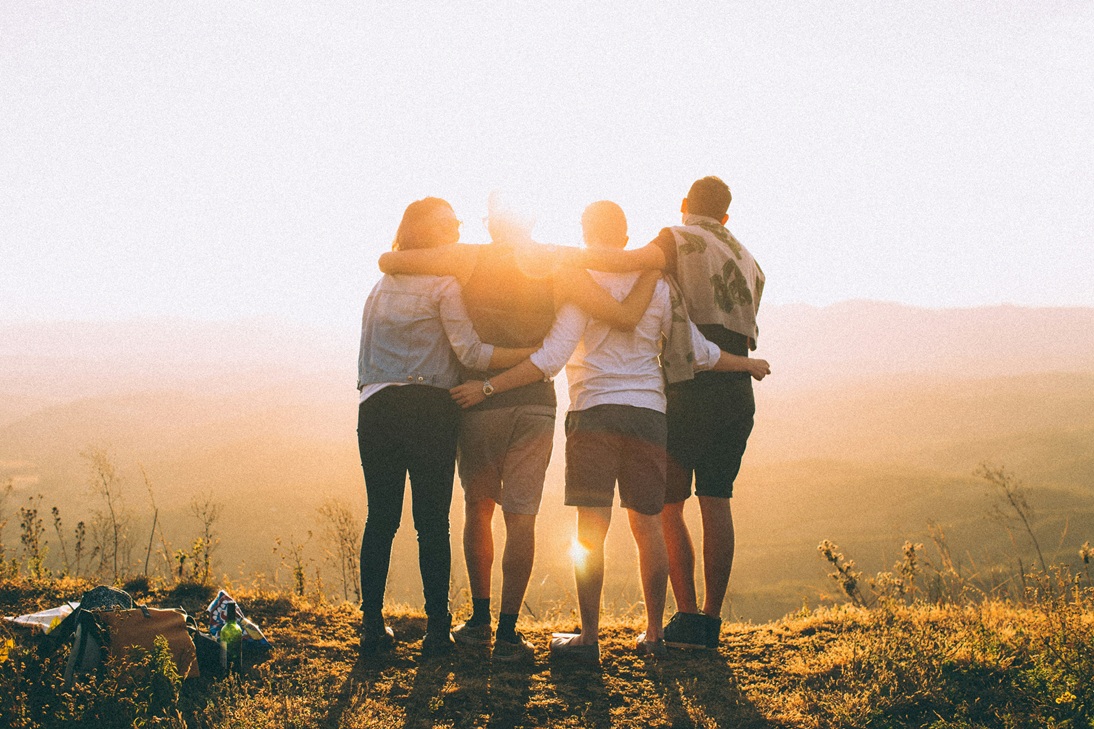
In this evermore digitalised age, community and collective experiences are crucial. “More and more, travellers are craving community and connection and some of the new longevity-focused programmes are centred around communal activities like hiking and vision boarding,” writes Jen Murphy in Condé Nast Traveller. We know that residents of the world’s Blue Zones all have a strong attachment to their communities – in fact, research shows that social connections can increase our chances of survival by 50%.
The craving for human connection spills into other travel themes too: according to Skyscanner, 30% of 25-34 year olds travelling to watch a sporting event say it’s about feeling part of a community; 28% of those wishing to experience Wild West-inspired travel are particularly enthusiastic about eating around a campfire; and 26% of people who travel to discover immersive art do so because it is a shared experience.
Where can I get this in France?
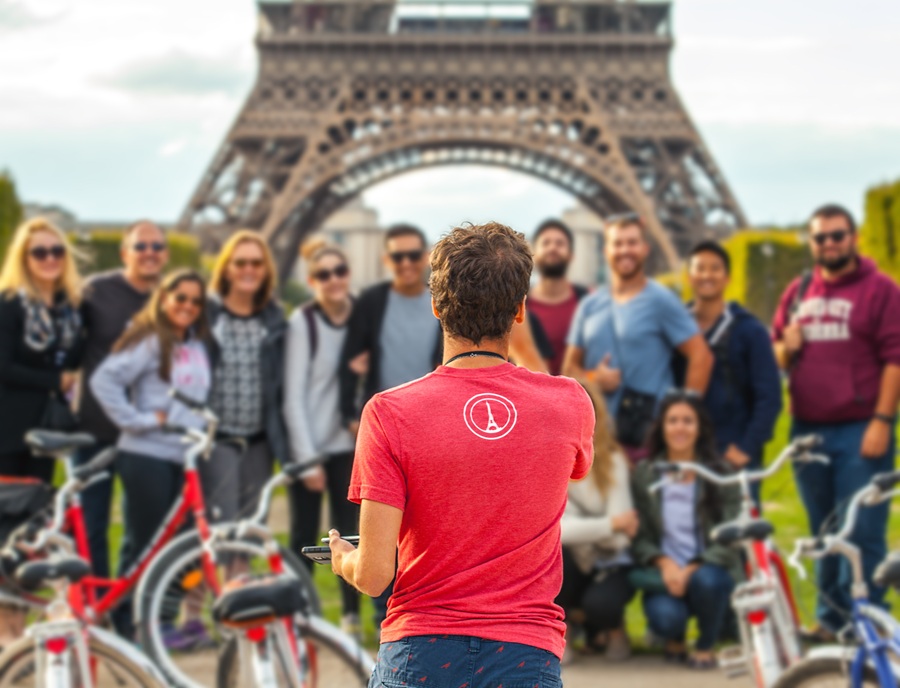
The universal greeting of ‘Bonjour’ is very important in France and can be a welcome balm for isolated British city dwellers. “The human connection was mentioned a lot when we spoke to French people about why bonjour is so important. Especially for people working in retail or service – a greeting acknowledges them as a person, rather than just a machine there to serve your needs,” writes The Local. This bodes well wherever you are in France – but to make closer connections, consider joining the collective buzz at a sporting event this year: the Tour de France departs from Lille on 5 July and Eurogames take place in Lyon from 23-26 July. Or book a group tour of Paris with a wealth of different themes to choose from.
5. Blue Mind Theory

A term coined by marine biologist Dr. Wallace J. Nichols, ‘Blue Mind’ refers to the extraordinary effects of water – in all its shapes and forms – on our health and wellbeing. Why are we drawn to lakes, rivers, oceans and pools each summer? Why does being near water set our minds and bodies at ease? In his book, Nichols delves into the neuroscience and presents compelling examples of water encouraging mindfulness, boosting creativity, healing addictions and even helping with autism.
Where can I get this in France?

France’s three coastlines and numerous lakes, marshes and waterways make every region of the country a Blue Mind zone – and travellers are spoilt for choice of watery wellness, from ice therapy and water sound baths to floating yoga and surf retreats. The island of Corsica is one of the best destinations for ocean pleasures, with 1,000km of its own coast, a mixture of white sandy bays and pebbly coves widely considered some of the cleanest and most beautiful in France. Go for diving and snorkelling: water visibility can be up to 40 metres, there is incredible marine biodiversity in protected UNESCO zones and a range of wrecks are waiting to be explored.
6. Astrotourism
Stargazing is big business, reflecting a growing collective appreciation of belonging to something bigger than ourselves. ‘Astrotourism’ combines the adventure of exploring celestial events alongside the mystical insights of astrology. According to Skyscanner, astrology is something more UK travellers are enjoying, especially younger Gen Z and Millennials, who are seeking a sense of connection with the cosmos. One of travellers’ biggest questions last year was “Where to see a solar eclipse?”*
*Based on global Google searches in English for selected keywords for first six months of 2024 compared to the same period in 2023 (Source: Mangools)
Where can I get this in France?

Visit an International Dark Sky Reserve. There are now six in France: the latest, just recognised this year, is the Landes de Gascogne – while the first was Pic du Midi in the Pyrenees. Designated in 2013, it encompasses both a UNESCO World Heritage Site and a French national park, with the highest peak reaching 2,877m. Book a cable car to the summit and visit the Planetarium and Observatory Dome, which runs immersive overnight stays with fine dining and a chance to stargaze through state-of-the-art telescopes.
7. Equine therapy
Take country music’s surge in popularity, smash-hit TV westerns, Netflix’s America’s Sweethearts and the Disney+ adaptation of Jilly Cooper’s Rivals… the dramatic rise in interest in all things cowboy and cowgirl is clear to see. Skyscanner notes that 23% of UK travellers are fans of ‘Cowboy Core’, rising to 49% among 18-24-year-olds. Wellness seekers are galloping to destinations that promote the healing power of horses. The act of whispering into a horse’s ear is believed to calm the nervous systems of both parties, providing a grounding connection and release from the fight-or-flight mode familiar to so many of us.
Where can I get this in France?
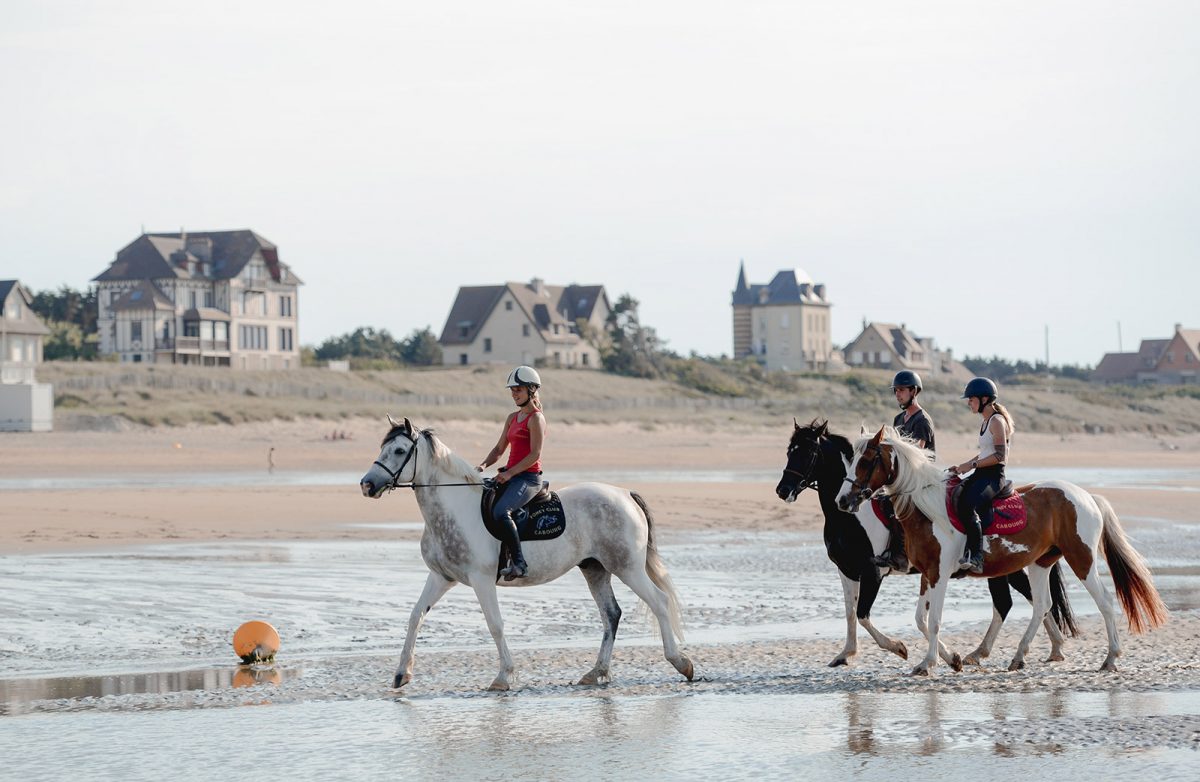
Take a ride along Cabourg Beach on Normandy’s Côte Fleurie with Le Home Pony Club. This friendly, family-run club welcomes riders of all ages and abilities all year round, matching them with 48 horses and ponies. Sessions begin with essential grooming and bonding to build trust and companionship and continue with an arena briefing, before heading out to the golden sandy beach lined with Belle-Époque villas. Finish with a glass of champagne at sunset.
8. Regenerative food tourism

Regenerative food cultivation transcends sustainability, focusing not only on minimising harm but on leaving a positive lasting legacy. Explore.com says that 50% of their consumers name food an influential factor when choosing their holiday destination, with 48% naming it as the main way they get to know a destination’s culture. According to other industry reports, we’re now looking less at ‘farm-to-table’ and more at ‘soil-to-soul’ – the focus being on redefining how we connect with the food on our plate and the land from which it came.
Where can I get this in France?

Olives en Provence is a self-catering gîte lying in secluded calm at the end of a forest track at Domaine des Escavalins, a working organic olive oil farm in Provence. The owners use their own mill to press the olives and accept volunteers for the autumn harvest. Since their arrival in 2004, they have been committed to agro-forestry, integrating wild and domestic animals in the wooded areas and the olive groves to create genuine biodiversity, which in turn produces economic benefits across the whole farm. Their land now forms part of a Natura 2000 and the new Sainte-Baume national park. And of course, olive oil is excellent for your health: rich in antioxidants and phenolic compounds which reduce the risk of cancers and heart disease.
In the same region last year, Domaine Mirabeau became France’s first Regenerative Organic Certified (ROC) vineyard.
Enjoyed this? Subscribe to the blog via the homepage and never miss a post!
 franceuncovered.com